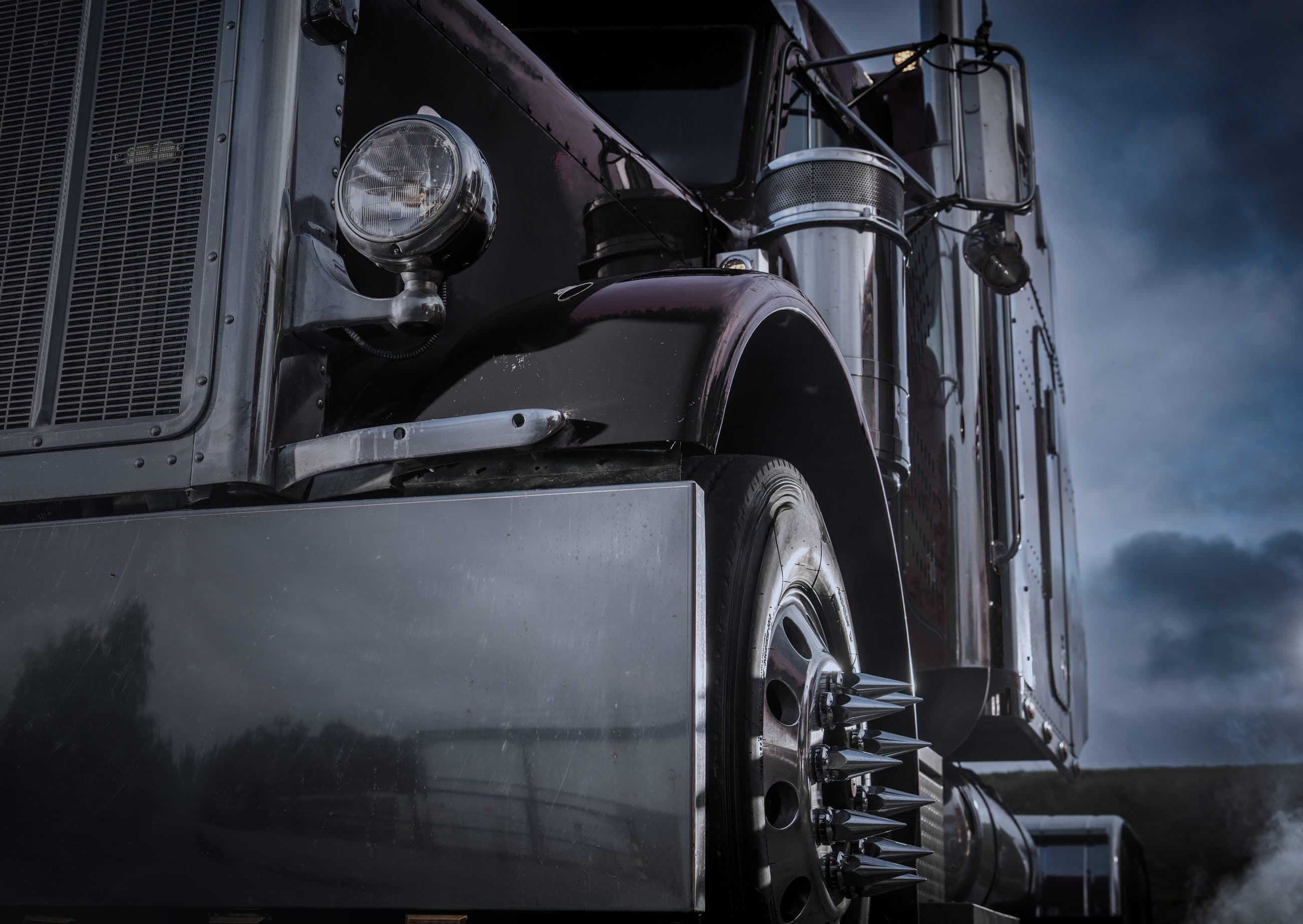
Commercial Truck Accident Lawyers
Truck cases.
The trucking practice of Zayed Law. Representing people injured in crashes involving semi-trucks, delivery trucks, and other commercial vehicles.
We investigate what happened — and build the evidence of what it has cost you.
Representing injured people in Illinois & Florida.
People.Accountability.Safer roads.
The crash
What happened. What the evidence shows.
The company
The people and decisions involved.
Your life afterward
Your injuries. Your treatment. Your future.
As Seen In
Recognized by the Industry






We build cases brick by brick — through statistics, strategy, and behavioral science.
Know Your Rights
Hit by a commercial vehicle? Know your rights
The company whose name is on the truck is not always the company that employs the driver, owns the vehicle, or carries the insurance. Delivery networks in particular run through contracted businesses, and identifying which one operated the vehicle is the first step in understanding what claim exists.
Who the defendant is decides almost everything that follows. A claim against a private carrier runs on the ordinary rules. A claim against a public body — a city refuse truck, for instance — can face a shorter deadline, a mandatory notice step before suit, and a statutory ceiling on recovery no matter how severe the injury.
Your path to justice starts now.
Fighting For Our Clients
Representing people injured by trucks and commercial vehicles in Illinois and Florida.
Truck and commercial vehicle claims are brought on a contingency basis — you owe no legal fee unless the case recovers.
Experience
Since 2009
Zayed Law Offices has represented injured people and their families since it was founded — a trial practice in Illinois and Florida built on commercial vehicle and catastrophic injury work.
That business is frequently not the one you would name from looking at the truck. Delivery networks run through contracted local companies. Waste haulers register a separate corporate entity in each state. Private fleets — the utility, the food distributor, the landscaping company — put their own employees behind the wheel under a name that may appear nowhere on the vehicle.
The questions a claim generally has to answer are:
- Which company was actually operating the vehicle, and under whose authority
- Whether the driver was that company's employee or somebody else's
- Whether the operator's own conduct — hiring, training, scheduling, maintenance — contributed
- Whether a public body is involved, which changes the deadline, the procedure and the ceiling on recovery
- What insurance sits behind each of those answers
The first of them is what this site is organized around, because getting it wrong early is expensive and often cannot be undone.
Research Library
Where to start
Most commercial vehicle cases turn on a question people do not expect: which company was actually running the truck. The research below works through it, defendant by defendant.
Compensation
What compensation can be recovered after a truck collision?
Compensation is meant to address the medical, financial, and personal consequences of the injury. It divides into economic damages, non-economic damages, and — where a family has lost someone — wrongful death damages. What is actually available also depends on who the defendant turns out to be.
Economic damages
The quantifiable financial losses: emergency and ongoing medical treatment, surgery and rehabilitation, assistive equipment and home modification, travel to treatment, lost income, lost earning capacity, and the cost of the care the injury will require in future.
These are proved with records — bills, pay history, and a projection of future treatment and care costs — rather than estimated.
Non-economic damages
Compensation for losses that do not arrive as an invoice: pain and suffering, disfigurement, the physical effects of the injury and its treatment, loss of a normal life, emotional distress, and loss of consortium for a spouse.
Where the defendant is a public body rather than a private company, Florida law puts these damages inside a statutory ceiling no matter how severe the injury is. Against a private carrier there is no such ceiling.
Wrongful death and survival damages
Where the person injured has died, state law generally provides for two related claims: a survival claim for what the person suffered before death, and a wrongful death claim for the losses to surviving family members — which can include funeral and burial expenses, lost financial support, and the loss of the person's companionship, guidance, and society. Which relatives may recover, and for what, is set by the governing state statute.
- The vehicle. What it was, what was written on it, and — if it was captured anywhere — the USDOT number. Photographs, dashcam footage, and the police report's vehicle description all feed this.
- The operator. Which company was running the vehicle, and whether the driver was that company's employee or worked for a contracted business. This is the question the rest of the claim is built on.
- Public or private. Whether a municipality, county, transit authority, or school district sits anywhere in the chain. If one does, the deadline and the procedure change immediately — and in Illinois the clock runs out in one year.
- The injury and the treatment. What was diagnosed, what treatment has happened, and what is still to come. The medical record is what the loss is proved from.
- The evidence that is perishable. Electronic control module data, telematics, dashcam footage, dispatch and hours-of-service records — all held by the operator, all subject to retention periods shorter than people expect.
- The insurance behind it. Which policies apply and in what order, and whether the operator is large enough to be self-insured at the levels the claim occupies.
- The deadline. Which limitation period applies to this defendant in this state, and whether a pre-suit notice step has to happen before a complaint can be filed at all.
How It Works
Your case, step by step
From the first call to resolution — what happens, and in what order.
01
Free Consultation
You tell us what happened and whatever you know about the other vehicle. We explain what claims may be available, who the likely defendants are, and where the deadline stands — no cost, no obligation.
02
Preservation and Investigation
We send preservation demands before the operational records age out, identify the operating company from its federal registration rather than from the livery, obtain the police report and any available footage, and establish which insurance applies.
03
Filing and Negotiation
We file in the appropriate venue — after any pre-suit notice a public defendant requires — and negotiate with the carrier and its insurers, supported by the operational records and the medical proof.
04
Trial or Resolution
Many commercial vehicle matters resolve without a trial. Where an offer does not reflect the losses, the case is tried.
How We Help
How a commercial vehicle case gets built
The center of one of these cases is identification: which company operated the vehicle, who employed the driver, and what insurance stands behind both. That answer is not printed on the side of the truck, and it decides how much is available to recover long before anyone argues about how the crash happened.
Alongside it runs the evidence that expires. Engine and telematics data, dispatch records, driver qualification files, hours-of-service logs and maintenance history are held by the operator and kept for periods measured in months rather than years. Getting a preservation demand out early is worth more than it looks.
Then the medical proof, the insurance analysis, and — where a public body is involved — the notice and limitation requirements that have to be satisfied before a complaint can be filed at all.
FAQ
Frequently Asked Questions
Common questions about truck and commercial vehicle claims — who is liable, and what changes when the defendant is a government.
It depends on who was actually operating the vehicle, and that is not always the company whose name is on it. Where the driver is an employee, the employer answers for the driver’s negligence under ordinary agency law. Where the vehicle was run by a contracted business — as much of parcel and delivery work is — the claim reaches that business first, and reaching the brand behind it becomes a separate question that has to be proved rather than assumed. Separately, a carrier can be liable for its own conduct: how it hired, trained, supervised, scheduled, and maintained.
The USDOT number displayed on the vehicle is the reliable identifier; the livery is not. A single corporate family often holds several separate federal registrations, and a van in national colors may belong to a local business you have never heard of. If it is safe to photograph that number at the scene, that one photograph is frequently worth more to the claim than anything else available at the roadside. The police report, the insurance information exchanged, and what the driver says about who they work for are the other early sources.
Not necessarily, and assuming it is the most common early error in these claims. FedEx tells its investors that it conducts much of its pickup-and-delivery work with roughly 100,000 motorized vehicles owned or leased by independent service providers — companies that are not FedEx. Amazon deliveries run substantially through contracted delivery businesses and through app-based drivers in their own cars. In both, the brand on the door and the employer of the driver are routinely different companies carrying different insurance.
Nearly everything procedural, and the changes are severe. In Illinois, 745 ILCS 10/8-101(a) gives you one year to sue a local public entity or its employee — half the period that applies to an ordinary defendant. Florida requires written notice of the claim to the responsible agency before suit under Fla. Stat. 768.28(6), and section 768.28(5)(a) caps recovery against the state and its subdivisions at $200,000 per person and $300,000 per incident, with anything above that payable only if the Legislature passes a claim bill. A private company holding a municipal contract gets none of that protection — which is why identifying the operator matters before the clock does anything.
That depends on the state, on the defendant, and on what kind of claim it is — and against a public body it is far shorter than the general rule, as above. These deadlines are strict, and missing one ends the claim regardless of its merit. Do not work out your own deadline from a web page, including this one. Get it confirmed against your own facts early, while there is still room to act on the answer.
Nobody can tell you before the work is done, and a figure offered on a first call is a marketing number rather than an assessment. What a claim is worth turns on the injury and the treatment it requires, lost income and lost earning capacity, how clearly the operator can be identified and connected to the crash, how much insurance sits behind that operator, and whether a statutory ceiling applies because the defendant is a public body. Change any one of those and the analysis changes with it.
Nothing up front. These matters are handled on a contingency fee basis: there is no legal fee unless the case recovers. Case costs are advanced by the firm and reimbursed out of any recovery rather than billed to you during the case. The specific fee and cost terms are set out in the written engagement agreement before any work begins.
Where We Practice
Illinois & Florida
A trial firm handling truck and commercial vehicle injury claims in Illinois and Florida.
- Chicago OfficeZayed Law Offices1132 S Wabash Ave, Suite 303Chicago, IL 60605-2305
- Joliet OfficeZayed Law Offices195 Springfield Ave, Suite 202Joliet, IL 60435
- Miami OfficeZayed Law Offices804 NW 21 Terrace, Suite 205Miami, FL 33127
Call 24/7312.500.2674
Contact
Talk to our truck and commercial vehicle team
We represent people injured in collisions with commercial vehicles, and the families of those who have died in them. Tell us what you know — even if that is only a police report number — and we will explain who the likely defendants are and where the deadline stands.
Free Consultation
Get your free case evaluation today
Were you or a family member injured in a collision with a truck or commercial vehicle?