Who Is Liable · Parcel Carriers

Amazon Delivery Vehicle Accident Claims

An Amazon package can arrive in a branded van, an unmarked rental, or a private car. Each one puts a different company — and a different insurance policy — between the driver and the brand.

Availability
24/7 · No fee unless we win
Practice
Illinois & Florida
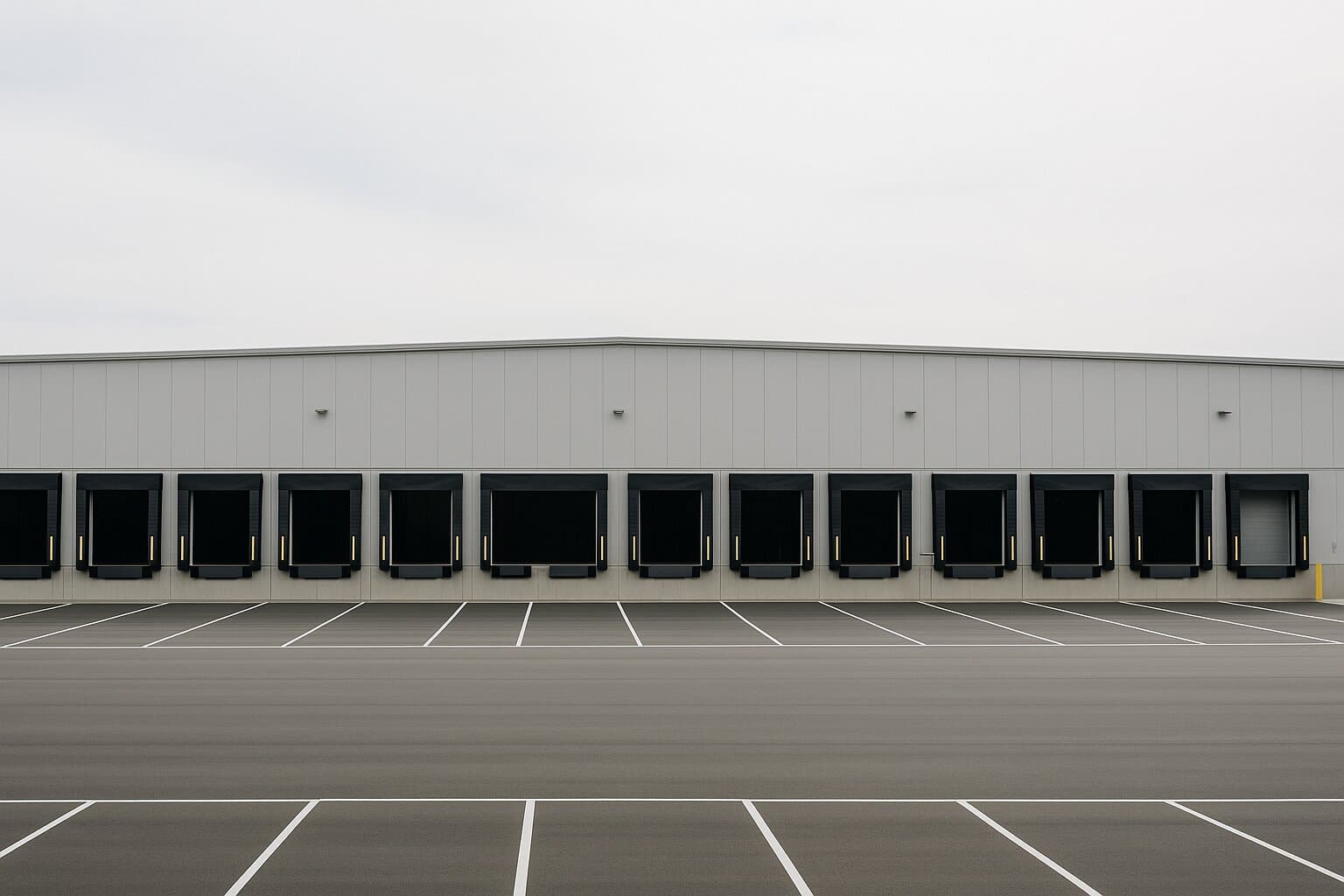
A long row of closed loading dock doors along the face of a distribution warehouse.

Who is liable after a crash with an Amazon delivery driver?

It depends on which of several delivery arrangements the driver was working under, and unlike other carriers the vehicle itself often gives no indication. Amazon deliveries are made by branded vans operated by contracted delivery businesses, by app-based drivers using their own unmarked vehicles, and by conventional freight carriers. Amazon's own annual report does not describe these programmes by name; it says only that the company uses independent contractors and temporary personnel to supplement our workforce. Its federal motor carrier registration is also atypical: USDOT 2881058 reports 15,259 power units against 42,486 drivers, roughly 2.8 drivers per vehicle where employee fleets sit near one. That ratio has innocent explanations and is not by itself proof of anything. The practical consequence is that the responsible entity must be established from the facts of the specific delivery, not assumed from the brand.

01

Three Different Deliveries

If an Amazon delivery driver caused your collision, the first question is not a legal one. It is factual: which kind of Amazon delivery was it?

A branded van running a fixed route is generally operated by a contracted local delivery business, not by Amazon directly. That business owns or leases the vans, employs the drivers, and carries the insurance.

An app-based driver delivering in a private car is a different arrangement again — an individual using a personal vehicle and, ordinarily, a personal auto policy that may or may not respond to a loss occurring during commercial delivery work.

Freight moving into and between Amazon facilities is a third category, closer to conventional trucking, and can involve carriers with no visible Amazon connection at all.

One brand, three structures, three different answers about who is responsible and what insurance exists. The vehicle at the roadside frequently does not tell you which one you are in.
02

What Amazon's Filings Say

For most large carriers the annual report is the best available description of how the operation is structured. For Amazon it is conspicuously thin on this point, and that is worth saying plainly.

Amazon's most recent Form 10-K does not use the phrase "Delivery Service Partner" at all, nor does it name its app-based delivery programme. On workforce composition it states that as of 31 December 2025 the company employed approximately 1,576,000 full-time and part-time employees, and adds that "we use independent contractors and temporary personnel to supplement our workforce."

Contrast FedEx, which quantifies the arrangement precisely — roughly 100,000 vehicles owned or leased by independent service providers — and names the employment-status question as a risk factor.

FedEx's own filing, describing its competitors, says that high-volume shippers such as Amazon are "developing and implementing in-house delivery capabilities and utilizing independent contractors and delivery service providers for deliveries."

In other words: the clearest description in a federal filing of how Amazon's delivery network is structured comes from a competitor's annual report, and Amazon's own filings say almost nothing about it.

03

The Registration Is Unusual

Amazon Logistics holds a federal motor carrier registration, and its self-reported figures do not look like those of a conventional fleet.

On USDOT 2881058 it reports 15,259 power units and 42,486 drivers. That is roughly 2.8 drivers for every power unit. Employee fleets cluster near one to one — UPS reports about 1.15, Schneider about 1.15, Werner about 0.92.

It is worth being careful about what that does and does not show. A high driver-to-vehicle ratio has ordinary explanations: vehicles run across multiple shifts, and drivers across a partner network may be reported against a single registration. It is a signal that the operation is not structured like a conventional employee fleet. It is not evidence of any legal conclusion, and it should not be presented as though it were.

These figures are also self-reported by the carrier on a federal form and are not validated by the regulator. They are a starting point for investigation, not a finding.

04

The Unmarked Vehicle Problem

The hardest version of this case is the one where nothing identifies the delivery at all.

A private car making app-based deliveries carries no livery, no USDOT number, and nothing to distinguish it from any other vehicle. If the driver does not volunteer that they were working, the commercial dimension of the collision can be invisible at the scene — and it will not appear on the exchange-of-information form either.

Contemporaneous detail is what recovers it later: delivery bags or packages visible in the vehicle, a phone mounted and running a delivery application, what the driver said about where they were going. Photographs taken at the scene are worth more than a recollection given months afterwards.

This matters because it can determine whether any commercial coverage exists at all. A personal auto policy may exclude or limit cover for commercial delivery use, and whether some other policy responds can depend on facts about the delivery that nobody recorded.

05

What Is Actually Contested

Where the driver worked for a contracted delivery business, the immediately responsible defendant is that business, and reaching Amazon is a separate and contested question that turns on the degree of control exercised over the operation.

The relevant evidence is operational: how routes were assigned, what the delivery schedule required, what technology monitored the driver during the day, and what standards the contracted business was required to meet. Whether that amounts to enough control is fact-specific and has been litigated with varying outcomes.

What this page will not do is tell you how that question resolves. It is genuinely unsettled, it varies by jurisdiction and by the facts of the particular operation, and any page that gives you a confident answer is overreaching.

What is reliable is the shape of the problem: identify the operating business first, establish what insurance responds, and treat the route to the parent company as something to be proven rather than assumed.

06

Preserving the Record

Almost everything that determines the answer here is electronic and held by someone else.

Route assignment, delivery scheduling, in-vehicle monitoring, and the application data showing whether a driver was on an active delivery are all records generated by systems the injured person has no access to and often a short retention window.

That makes early written preservation demands unusually valuable in Amazon cases — more so than in a collision with a conventional carrier, because here the records go beyond how the crash happened: they are the evidence of who was responsible for the driver in the first place.

FAQ

Frequently Asked Questions

Common questions about branded vans, drivers in personal cars, and how to find out who is actually responsible.

Free Consultation

Get your free case evaluation today

Were you or a family member injured in a collision with a truck or commercial vehicle?

Where We Practice

Illinois & Florida

A trial firm handling truck and commercial vehicle injury claims in Illinois and Florida.

  • Chicago Office
    Zayed Law Offices1132 S Wabash Ave, Suite 303Chicago, IL 60605-2305
  • Joliet Office
    Zayed Law Offices195 Springfield Ave, Suite 202Joliet, IL 60435
  • Miami Office
    Zayed Law Offices804 NW 21 Terrace, Suite 205Miami, FL 33127

Call 24/7312.500.2674