Who Is Liable · Municipal & Waste

Garbage Truck Accident Claims

Two identical refuse trucks on the same street can produce two completely different claims. One is a case against a private company. The other is a case against a government, and it may already be too late.

Availability
24/7 · No fee unless we win
Practice
Illinois & Florida
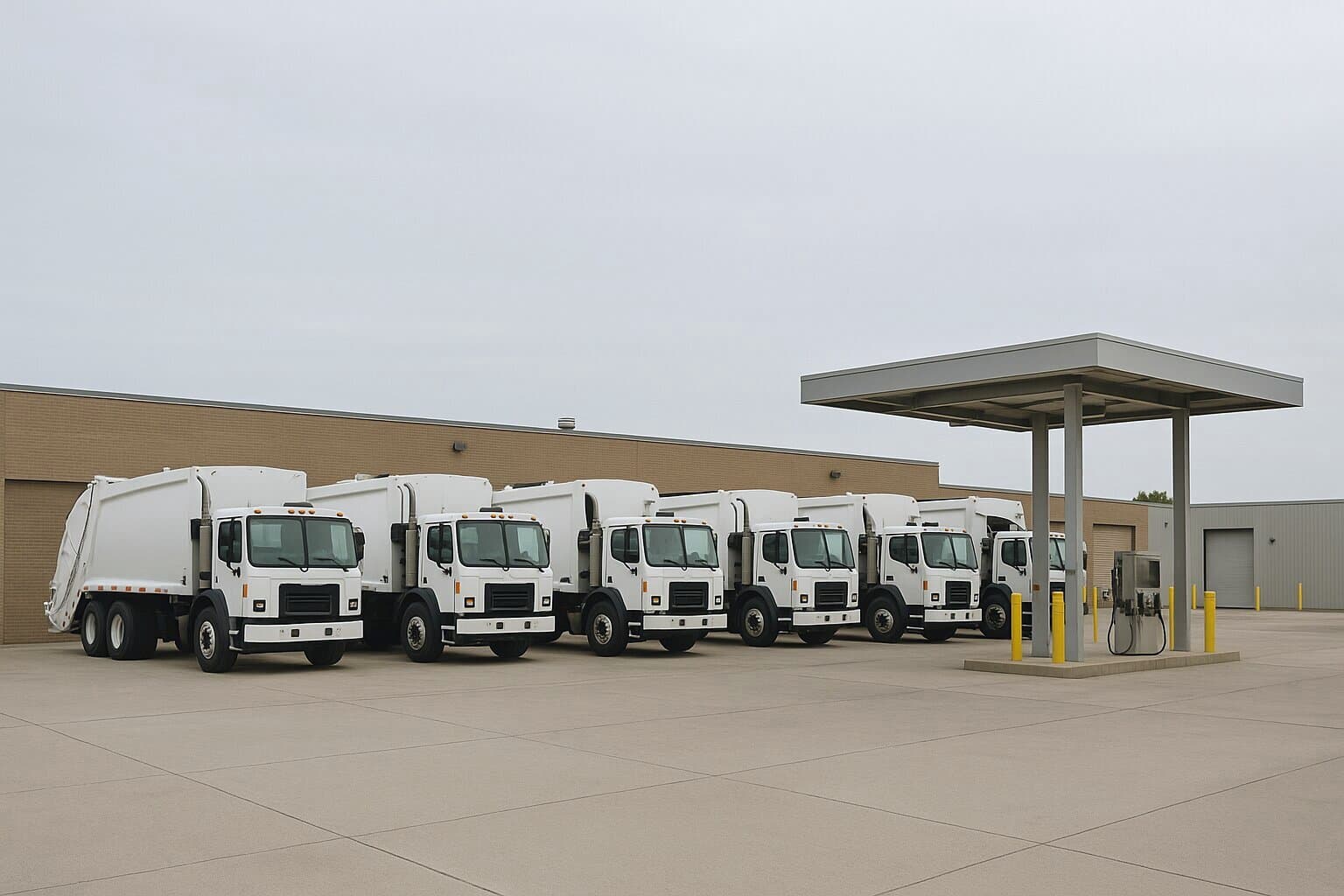
A line of refuse collection trucks parked under a fueling canopy at a depot.

Who is liable after a garbage truck accident?

It turns on whether the truck was operated by a public body or by a private waste company, and the difference is severe. Against a public body in Illinois, a civil action for injury must be commenced within one year under 745 ILCS 10/8-101, half the ordinary personal-injury period. In Florida, section 768.28 requires written pre-suit notice before an action may be brought and caps recovery at $200,000 per person and $300,000 per incident, with anything above that payable only by act of the Legislature. Against a private hauler none of that applies: no cap, no notice precondition, and the ordinary limitation period. A municipal collection contract does not make a private company immune. Establishing which one you are dealing with is the first task, and in Illinois the clock is already running.

01

Why This Question Comes First

Refuse collection is performed in some places by municipal employees driving municipally owned trucks, and in others by private companies under contract to the same municipality. From the street the two look much alike — a large slow vehicle making frequent stops, often with a city name somewhere on it.

The legal consequences are not alike at all. A claim against a public body runs into a body of immunity and procedure that does not exist for a private defendant: shorter deadlines, mandatory pre-suit steps in some states, and statutory ceilings on what can be recovered no matter how severe the injury.

This is the single most consequential fact-finding question on this site, because getting it wrong is not recoverable. A deadline missed because the defendant was assumed to be private does not reopen.

Refuse trucks also cause a distinctive injury profile. They operate in residential streets among pedestrians and cyclists, they stop and start constantly, they reverse frequently, and they have substantial blind zones. Many of the most serious cases involve people on foot.
02

Illinois: One Year

Illinois compresses the deadline. Under the Local Governmental and Governmental Employees Tort Immunity Act, section 8-101(a) provides that no civil action may be commenced against a local entity or any of its employees for any injury unless it is commenced within one year from the date that the injury was received or the cause of action accrued.

That is half the period that applies to an ordinary personal-injury claim in Illinois, and it is the trap. Someone injured by a city refuse truck who waits, reasonably, while treatment continues can find the claim extinguished before they ever spoke to a lawyer.

The Act defines "civil action" broadly for this purpose, providing that the term includes any action, whether based upon the common law or statutes or Constitution of this State — so recasting the theory does not escape it.

There is one point in the injured person's favour. Illinois no longer imposes a separate pre-suit notice requirement in this Article: section 8-102 appears as repealed by Public Act 84-1431. So the Illinois problem is purely the clock — a short one, but a single one.

03

Florida: Notice, Then a Cap

Florida runs the opposite way: more time, but two obstacles Illinois does not have.

A mandatory pre-suit notice. Section 768.28(6)(a) provides that an action may not be instituted against the state or one of its agencies or subdivisions unless the claimant presents the claim in writing to the appropriate agency, and — except as to a claim against a municipality, county, or the Florida Space Authority — also to the Department of Financial Services, within 3 years after such claim accrues.

Note the carve-out, because it is easy to get backwards: for a claim against a municipality or county — which is what a city refuse operation usually is — the Department of Financial Services notice is not required. The agency notice still is.

A waiting period. The agency then has time to respond, and section 768.28(6)(d) provides that failure to make final disposition of a claim within 6 months after it is filed is deemed a final denial for purposes of the section.

A hard ceiling. Section 768.28(5)(a) provides that neither the state nor its agencies or subdivisions shall be liable to pay a claim or judgment by any one person exceeding $200,000, or claims arising out of the same incident exceeding $300,000 in total. The same provision excludes punitive damages and pre-judgment interest.

What happens above the ceiling is not that the injury goes uncompensated in principle — it is that the excess portion of a judgment may be reported to the Legislature and, in the statute's words, "may be paid in part or in whole only by further act of the Legislature." That is the claims-bill process, and it is a legislative act rather than a legal entitlement.

For a catastrophic injury caused by a municipal vehicle in Florida, that cap is frequently the defining fact of the entire case.

04

Private Haulers Are Not Immune

A great deal of refuse collection in both states is performed by private companies, and a private company does not acquire governmental immunity by holding a municipal contract.

Where the operator is a private hauler, the ordinary rules apply. There is no statutory damages cap, no pre-suit notice precondition of the kind section 768.28 imposes, and the standard limitation period rather than the compressed Illinois one. The claim proceeds as it would against any commercial motor carrier — including claims against the company for its own negligence in hiring, training, supervision, scheduling and maintenance.

The practical difference in a severe case is enormous. A catastrophic injury that would be capped at $200,000 against a Florida municipality is subject to no such ceiling against the private company collecting on the next street.

So this is not a technicality to resolve later. It is the question that determines the value of the claim.

05

Find the Right Corporate Entity

When the hauler is private, there is a second identification problem, and it defeats people who assume a national brand is a single company.

The large waste companies register with federal regulators through separate state-level subsidiaries rather than as one national carrier. Waste Management appears as distinct registrations including Waste Management Inc of Florida, Waste Management of Pennsylvania, and Waste Management of Texas. Republic Services and Waste Connections follow the same pattern with their own state entities.

The correct defendant is generally the operating subsidiary, not the national parent whose name is on the truck. Naming only the parent is a common and costly error.

One further trap in those records: the state shown on a federal registration is the company's corporate address, not where its trucks run or where suit belongs. Republic's Indiana transportation entity, for example, files from Arizona. Do not read the registration state as the venue.

As with every other page on this site, the USDOT number displayed on the vehicle is the identifier that resolves this reliably, and the livery is not.

06

What To Do Now

Establish who operated the truck, immediately. Municipal or private is the question everything else depends on. A city name on the vehicle does not settle it — municipalities contract collection out, and contractors sometimes run city-branded equipment.

Assume the shorter deadline until you know otherwise. In Illinois that means treating the claim as though the one-year public-entity limitation applies until it is confirmed that the operator was private. That approach costs nothing if you are wrong and saves the claim if you are right.

In Florida, treat the notice step as the first deliverable, not a formality. It is a precondition to suing at all, and the agency response period runs after it is filed, not before.

Photograph the vehicle if you safely can — the USDOT number, the unit number, and any company name. In a case where the identity of the operator determines the deadline, the cap and the value, that photograph is worth more than any other thing you can do at the scene.

FAQ

Frequently Asked Questions

Common questions about suing a city, suing a private hauler, and the deadlines that apply to each.

Free Consultation

Get your free case evaluation today

Were you or a family member injured in a collision with a truck or commercial vehicle?

Where We Practice

Illinois & Florida

A trial firm handling truck and commercial vehicle injury claims in Illinois and Florida.

  • Chicago Office
    Zayed Law Offices1132 S Wabash Ave, Suite 303Chicago, IL 60605-2305
  • Joliet Office
    Zayed Law Offices195 Springfield Ave, Suite 202Joliet, IL 60435
  • Miami Office
    Zayed Law Offices804 NW 21 Terrace, Suite 205Miami, FL 33127

Call 24/7312.500.2674