Who Is Liable · Parcel Carriers

UPS Truck Accident Claims

Of the large parcel networks, UPS has the most straightforward structure to sue: it runs its own trucks with its own drivers. That removes the fight most delivery cases begin with — but it does not remove the fight.

Availability
24/7 · No fee unless we win
Practice
Illinois & Florida
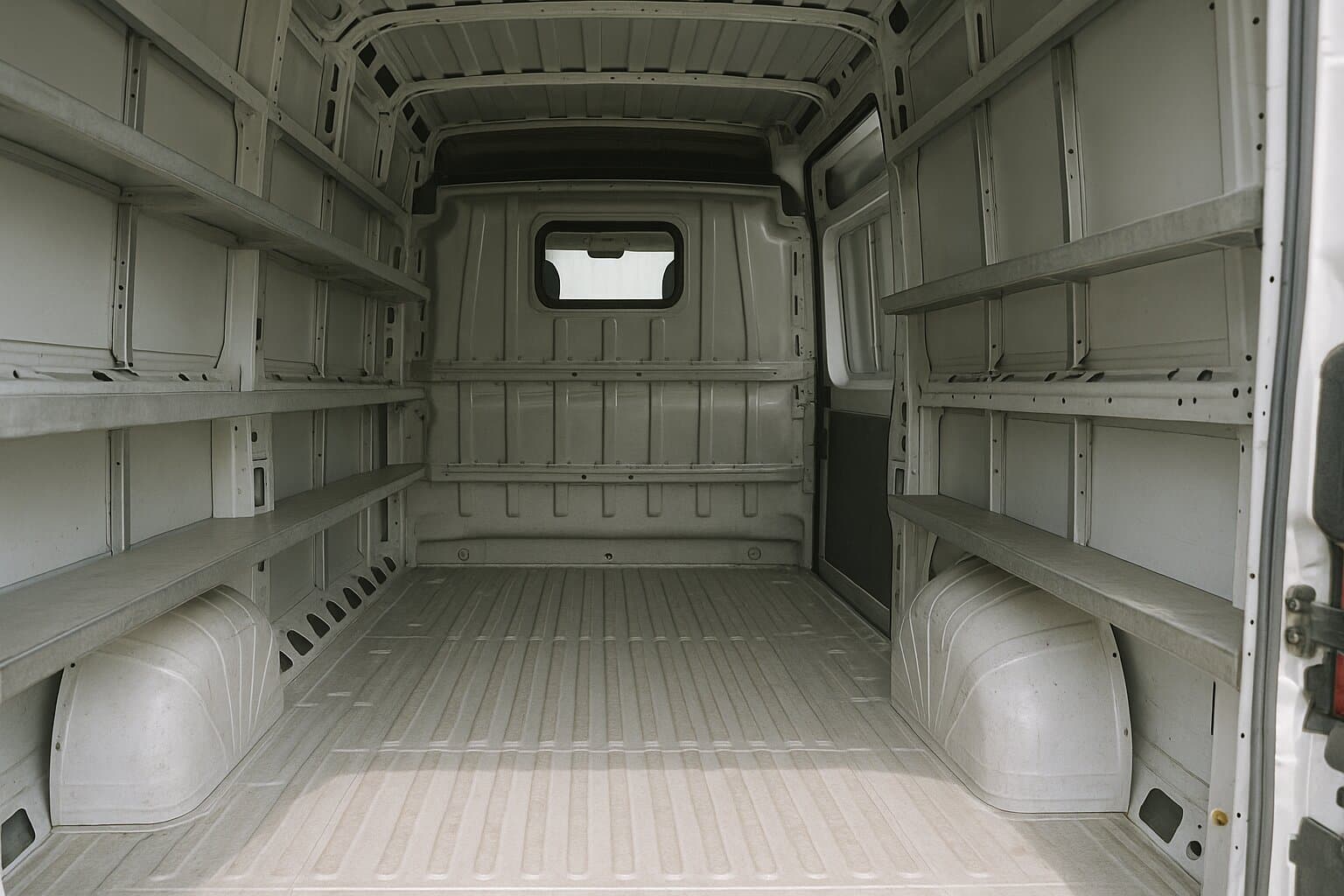
The empty cargo area of a parcel delivery van, seen from the open rear doors.

Who is liable after a crash with a UPS truck?

In most UPS collisions the defendant is UPS itself. UPS reports its drivers on its own federal motor carrier registrations — its largest, USDOT 21800, lists 112,321 power units and 128,806 drivers on one record. Because the driver is the company's employee rather than a contractor's, the doctrine of respondeat superior applies directly: an employer is answerable for an employee's negligence committed within the scope of employment. There is no intermediate contracting business whose insurance sits between the driver and the corporate defendant, which is the structural question that dominates FedEx Ground and Amazon delivery claims. That does not make a UPS case simple. It makes it a case against a large, self-insured, experienced defendant where the disputed issues move from who is responsible to what happened and what it is worth.

01

One Company, One Defendant

If a UPS truck hit you, the question that consumes most delivery-vehicle cases — whose driver was that — usually has a short answer.

UPS operates as a motor carrier with its own equipment and its own drivers. Its federal registrations reflect that: on USDOT 21800 it reports 112,321 power units and 128,806 drivers, a roughly one-to-one ratio of drivers to trucks that is characteristic of a fleet staffed by employees.

Compare that with what FedEx tells its investors. In its most recent annual report, FedEx discloses that it "conducts certain linehaul and pickup-and-delivery operations primarily with approximately 100,000 motorized vehicles owned or leased by independent service providers" — vehicles that belong to other businesses entirely.

That difference is the whole reason these are separate pages. Two brown-and-gold trucks and two purple-and-orange trucks can be doing identical work on the same street, and the corporate structure behind them can send a claim down two very different roads.
02

What Respondeat Superior Does

Respondeat superior is the rule that an employer answers for the negligence of an employee acting within the scope of employment. It is ordinary agency law, not a trucking rule, and it is why an employed driver's negligence reaches the company's balance sheet without any additional proof about the company's own conduct.

The practical consequence is about solvency, not blame. A driver personally is rarely able to pay a serious injury claim. The employer is. When the driver is an employee, that link is established by the employment relationship itself.

Where a delivery network runs on contracted businesses, that link has to be built rather than assumed — which is the subject of the FedEx Ground and Amazon pages, and the reason those claims can turn on evidence about routing software, scan rates and vehicle standards long before anyone reaches the question of how the crash happened.

Note what respondeat superior does not do. It does not decide whether the driver was negligent, and it does not decide what the injury is worth. It decides who pays if the driver was.

03

One Company, Several DOT Numbers

A single company is not a single federal registration, and treating one record as "the" carrier is a common early error.

UPS holds more than one active USDOT number. Alongside USDOT 21800 there is USDOT 24796, reporting 22,259 power units and 25,268 drivers — a substantial fleet in its own right, on a separate record, under the same corporate name.

This matters for a practical reason. The registration that governs a particular truck determines which safety record, which insurance filing, and which operating authority are actually relevant. Pulling the wrong record produces a confident, well-organised set of facts about a different fleet.

The reliable identifier is the USDOT number on the vehicle, not the name on the side of it. Photograph it if you safely can.

04

Claims Beyond the Driver

Respondeat superior is a claim about the driver's conduct that attaches to the employer. Separately, a carrier can be liable for its own conduct — how it hired, trained, supervised, scheduled and equipped.

These direct claims matter because they are not derivative. They survive arguments about what the driver did or did not do in the final seconds, and they reach decisions made in an office months earlier: a driver kept on the road after a pattern of incidents, a schedule that could not be run lawfully, a maintenance defect on a documented list.

They also change what evidence matters. Driver qualification files, hours-of-service records, telematics and maintenance history become central, and much of it is subject to retention periods that are shorter than people expect. That is why a preservation letter early in a case is worth more than it looks.

05

Why Simple Is Not Easy

The clean structure cuts both ways.

A carrier of this size is self-insured at the levels most claims occupy, has counsel engaged before the scene is cleared, and has handled this exact situation many thousands of times. Rapid-response investigation is routine for its defense teams. The evidence that helps most — electronic control module data, telematics, dashcam footage, dispatch records — sits in the defendant's hands from the first minute.

So the contest moves. It is rarely about whether the company is answerable for its driver. It is about mechanism, causation, the extent of injury, and what the loss is worth — and it is conducted by an opponent for whom this is routine work.

None of that is a reason not to bring the claim. It is a reason not to mistake a straightforward liability structure for a straightforward case.

06

Illinois and Florida

This site handles claims in Illinois and Florida, and the choice of forum affects a private-carrier case less than people expect. Against a private company like UPS there is no governmental immunity, no notice-of-claim precondition, and no statutory cap on damages of the kind that applies when a public body is the defendant.

That is worth stating plainly because it is the sharpest contrast on this site. A refuse truck operated by a city and a delivery truck operated by a private carrier can cause identical injuries and produce entirely different claims — deadlines, procedure and recoverable damages all change. That comparison is set out on the garbage and refuse truck page.

Deadlines still apply, and they are not the same in the two states. Get the applicable limitation period confirmed for your own facts; the general rule may not fit them.

FAQ

Frequently Asked Questions

Common questions about suing UPS, its insurance, and how these claims differ from other delivery cases.

Free Consultation

Get your free case evaluation today

Were you or a family member injured in a collision with a truck or commercial vehicle?

Where We Practice

Illinois & Florida

A trial firm handling truck and commercial vehicle injury claims in Illinois and Florida.

  • Chicago Office
    Zayed Law Offices1132 S Wabash Ave, Suite 303Chicago, IL 60605-2305
  • Joliet Office
    Zayed Law Offices195 Springfield Ave, Suite 202Joliet, IL 60435
  • Miami Office
    Zayed Law Offices804 NW 21 Terrace, Suite 205Miami, FL 33127

Call 24/7312.500.2674