Who Is Liable · Parcel Carriers

FedEx Delivery Truck Accident Claims

The truck carries the FedEx name. The business that owns it, employs the driver, and carries the insurance is frequently a different company — and identifying which one, before deadlines run, is the first real task in the case.

Availability
24/7 · No fee unless we win
Practice
Illinois & Florida
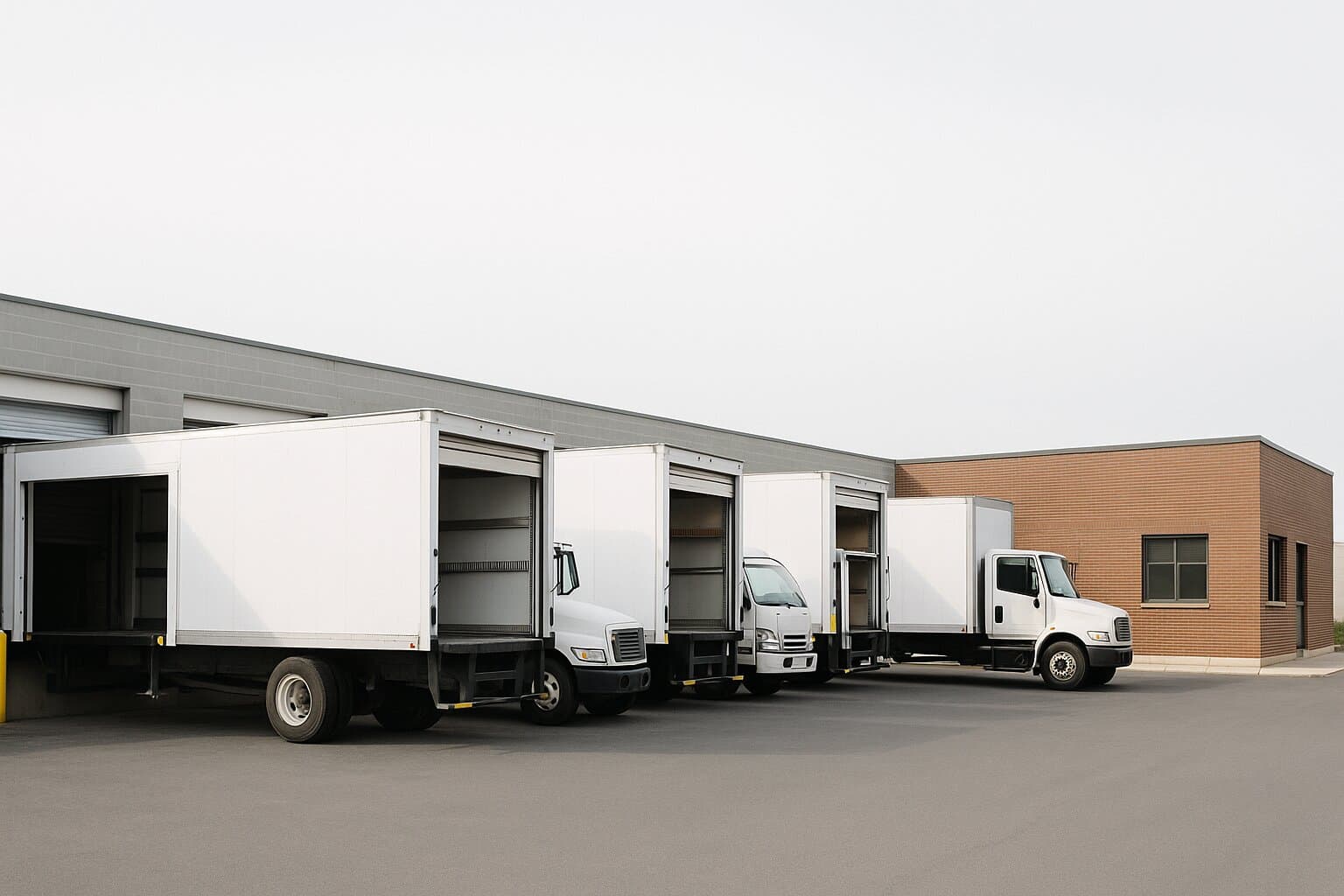
Unmarked white box trucks backed into the loading bays of a parcel depot.

Who is liable after a crash with a FedEx delivery truck?

It depends on which operation the truck was running under, and that is not visible from the livery. FedEx tells investors that it conducts certain linehaul and pickup-and-delivery operations primarily with approximately 100,000 motorized vehicles owned or leased by independent service providers, alongside roughly 82,000 vehicles it operates itself. Where an independent service provider is involved, that business owns the vehicle and employs the driver, so the immediately responsible defendant is the provider — often a company with far less insurance than the brand on the door. Reaching FedEx itself generally requires showing control over the operation rather than relying on the employment relationship, and FedEx's own annual report lists challenges to the employment status of drivers employed by service providers among its risks. Identify the operating entity from the USDOT number, not the paint.

01

What FedEx Tells Its Investors

The most reliable description of how FedEx delivery works is the one FedEx gives the Securities and Exchange Commission, because it is made under legal obligation and is not marketing.

In its annual report on Form 10-K, FedEx states that as of 31 May 2026 it "operated approximately 82,000 motorized vehicles in its global network and also conducts certain linehaul and pickup-and-delivery operations primarily with approximately 100,000 motorized vehicles owned or leased by independent service providers."

Read that carefully. More vehicles moving FedEx packages are owned or leased by other businesses than are operated by FedEx itself.

The same filing describes what FedEx provides to those businesses: it "offers service providers advanced route optimization technology," and "service providers contracting with us agree to use certain safety-related vehicle technologies and satisfy certain driver standards." And among the risks it identifies to its own transformation is its ability to "successfully manage challenges to the employment status of drivers employed by service providers utilized in certain linehaul and pickup-and-delivery operations."

That last sentence is the legal question of this page, stated by the company itself.
02

Why the Livery Does Not Tell You

A person standing at the roadside after a collision has no way to tell, from looking, whether the truck belongs to FedEx or to a contracted business operating under the FedEx brand. Both carry the same colours.

Federal registration records do not resolve it by name either. FedEx-branded entities appear across several separate USDOT registrations — FedEx Ground, FedEx Freight, Federal Express and others — each a different operating company with its own safety record and its own insurance position. A search by name alone routinely returns the wrong one; there are small, unrelated registrations with confusingly similar names sitting alongside the operating entities.

The USDOT number displayed on the vehicle is the identifier that actually resolves this, and it can be checked afterwards against the federal Company Snapshot record. If it is safe to photograph it at the scene, do. If not, a police report will often capture it, and it can be obtained later — but the sooner the operating entity is known, the sooner the right preservation demands can go to the right company.

03

The Insurance Problem

This structure has a blunt financial consequence.

An independent service provider running delivery routes is typically a local business with a fleet measured in the tens of vehicles. Its liability coverage is sized for that business. A catastrophic injury — a spinal cord injury, a traumatic brain injury, a death — can exceed those limits entirely.

When that happens, the practical question is no longer whether someone is responsible. It is whether the responsible party can pay, and whether any other party is answerable alongside it. That is what turns the corporate-structure question from an academic one into the question the case turns on.

It is also why these claims should not be evaluated on the assumption that a nationally known brand stands behind the vehicle. Sometimes it does. Establishing that is work.

04

Reaching the Parent Company

Where the driver is employed by a service provider, the employment relationship does not by itself reach FedEx. Claims that attempt to reach the parent generally rest on the degree of control actually exercised over the operation, and on the parent's own conduct rather than the driver's.

The evidence relevant to that inquiry is largely the material FedEx describes providing: route optimisation technology, contractually required vehicle safety technology, and driver standards that contracting providers agree to satisfy. Whether that degree of involvement is enough is a contested question, it is fact-specific, and it has been litigated for years in varying forms and with varying outcomes across jurisdictions.

This page does not tell you how that question comes out, because the honest answer is that it depends on the facts of the operation and the law of the forum. What it does tell you is that the question exists, that it is central, and that it needs to be identified early.

Anyone advising you on a FedEx delivery claim should be able to say which entity operated the truck, what its coverage is, and what the theory is for reaching anyone beyond it.

05

Network 2.0 Is Changing This

The structure is not static. FedEx is consolidating its Ground and Express operations under a programme it calls Network 2.0, which its annual report describes as implemented at approximately 360 locations in the U.S. as of 31 May 2026.

Critically for a claim, the filing states that under Network 2.0 FedEx uses "both employee couriers and service providers in surface operations using a market-by-market approach."

Market by market. The same brand, the same uniform, the same package — and a different answer to who employs the driver depending on the city, and depending on when. A conclusion reached about a FedEx operation in one place, or in an earlier year, should not be carried across to another without checking.

06

What To Do First

Three things matter more here than in an ordinary collision, and all of them are time-sensitive.

Capture the USDOT number. It is the only reliable identifier of the operating entity. Everything downstream — the correct defendant, the applicable insurance, the right preservation demand — depends on getting it right.

Preserve the electronic record early. Route optimisation and telematics systems generate exactly the operational data that shows how the route was run, and retention periods are frequently short.

Do not accept an early characterisation of who is responsible. The first account offered may name only the local provider. That may turn out to be correct. It may also be incomplete.

FAQ

Frequently Asked Questions

Common questions about the service provider model, who insures the vehicle, and how to identify the right defendant.

Free Consultation

Get your free case evaluation today

Were you or a family member injured in a collision with a truck or commercial vehicle?

Where We Practice

Illinois & Florida

A trial firm handling truck and commercial vehicle injury claims in Illinois and Florida.

  • Chicago Office
    Zayed Law Offices1132 S Wabash Ave, Suite 303Chicago, IL 60605-2305
  • Joliet Office
    Zayed Law Offices195 Springfield Ave, Suite 202Joliet, IL 60435
  • Miami Office
    Zayed Law Offices804 NW 21 Terrace, Suite 205Miami, FL 33127

Call 24/7312.500.2674