Who Is Liable · Rental Fleets

Rental Truck Accident Claims

The company painted on a rental truck is, by federal statute, usually the wrong defendant. The driver holds an ordinary license, the liability coverage may be the state minimum, and the real questions begin where the paint ends.

Availability
24/7 · No fee unless we win
Practice
Illinois & Florida
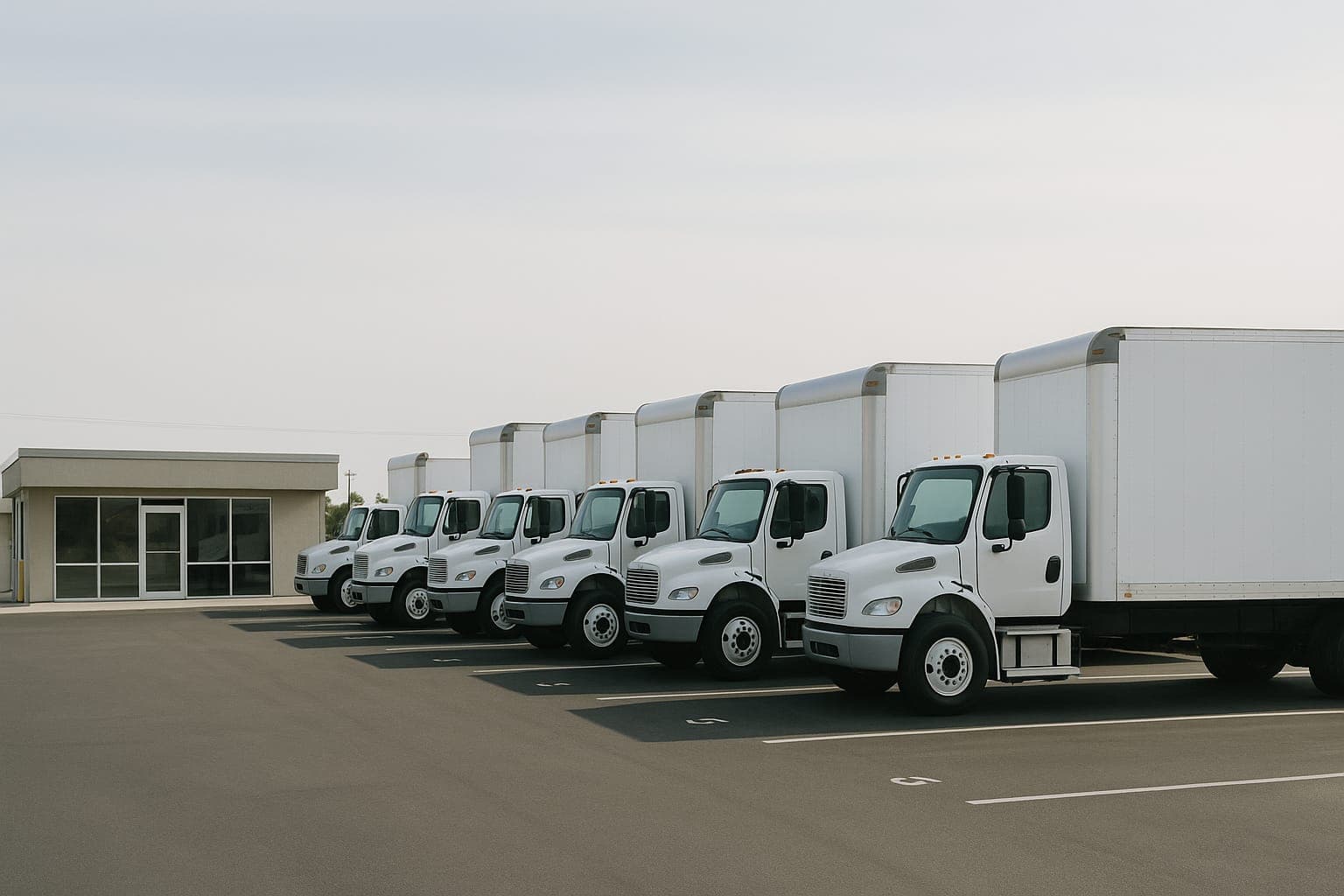
A row of unmarked rental box trucks parked outside a small rental office.

Who is liable after an accident with a rental truck?

Start with the driver and whoever put them behind the wheel, because federal law has largely removed the rental company as an owner-defendant. Under the Graves Amendment, 49 U.S.C. 30106, a company in the trade of renting or leasing vehicles is not liable for harm by reason of owning the vehicle. That shield carries a condition: it applies only where the owner itself was free of negligence or criminal wrongdoing, so claims aimed at the rental company's own conduct, such as the maintenance of the truck it handed over, survive. State financial-responsibility and insurance laws are expressly preserved. The recovery in practice is layered: the driver's liability, an employer's responsibility when the rental was for work, the rental transaction's coverage — which U-Haul's own materials describe as state minimums unless optional protection was purchased — and your own underinsured-motorist coverage. Identifying every layer early is most of the case.

01

Anyone Can Rent One

Federal licensing rules draw the commercial-license line at 26,001 pounds: a single vehicle rated at that weight or more is a Group B commercial motor vehicle. Now read the specification sheet for U-Haul's largest truck, published on its own site: gross vehicle weight, 25,999 pounds maximum. Driving at or over the line generally requires a commercial license; under it, an ordinary one serves.

Two pounds. That is the margin by which the biggest truck in the consumer rental fleet stays on the ordinary-license side of the federal line, and it is no accident of engineering. U-Haul's annual report describes its equipment as designed and manufactured for the do-it-yourself household mover — its fleet stood at approximately 204,800 trucks as of March 2026 — and a do-it-yourself product only works if a household license can operate it.

So the person piloting twenty-six feet of loaded truck through your intersection may never have driven anything larger than a sedan, received no training beyond a counter transaction, and be days into the most stressful move of their life. When that goes wrong, the first instinct is to look at the company whose name fills the side of the truck. Federal law has something specific to say about that instinct.
02

The Statute That Moved the Defendant

In 2005, Congress attached a provision to a highway bill that reshaped rental vehicle litigation. The Graves Amendment, 49 U.S.C. 30106, provides that an owner engaged in the trade or business of renting or leasing motor vehicles shall not be liable under state law, by reason of being the owner, for harm arising out of the vehicle's use during the rental period.

Before it, a number of states imposed liability on vehicle owners for crashes involving their vehicles regardless of the owner's own conduct — the rule lawyers call vicarious liability — and rental fleets absorbed it as a cost of the business. The statute swept that owner-status liability away for the rental industry wherever state law had imposed it, and its terms are broad: it covers affiliates under a control test, defines owner to include lessors and bailees in the rental trade, and applies to any action commenced after its enactment.

What this means for your case is blunt. A theory that begins and ends with "it was their truck" fails against a rental company. The claim has to rest on somebody's conduct — and the statute itself tells you whose conduct still counts.

03

What Graves Does Not Protect

The shield in section 30106(a) carries two conditions, and the second is where rental companies remain reachable: it applies only if there is no negligence or criminal wrongdoing on the part of the owner or its affiliate. Owner-status liability is gone; liability for the owner's own conduct is untouched.

Maintenance is the clearest example. A rental company services its own fleet, decides its inspection intervals, and chooses when a truck with a worn brake or a bald tire goes back on the line. U-Haul's annual report tells investors it routinely performs extensive preventive maintenance and repairs. Whether that happened for the particular truck that hit you is a records question, and the maintenance file, condition reports, and repair history for one identified vehicle are discoverable things.

The transaction itself can also be conduct, of the kind lawyers plead as negligent entrustment: keys handed to a renter who was visibly impaired, or who lacked a valid license, by employees applying the company's own counter policies. And subsection (b) preserves an entire category of state law: nothing in the section supersedes state financial-responsibility and insurance requirements imposed on vehicle owners and rental businesses. The federal shield was written around those laws, and they are part of the recovery picture below.

04

The Coverage, in Their Own Words

What insurance sits behind a rental truck? The candid answer comes from the rental counter's own published materials, and you should read it before assuming anything.

U-Haul's coverage FAQ answers the liability question directly: the company is insured for liability only to the state minimums, which are sometimes low. Its base Safemove package is a damage waiver with cargo and medical components and carries no liability coverage; liability protection arrives only with the optional Safemove Plus product, which adds one million dollars of coverage that pays claims first, before the renter's own auto policies. The same U-Haul article notes that many personal auto policies and credit cards may not cover rental moving trucks at all because of vehicle weight.

Assemble those pieces from the injured person's side of the crash. If the renter declined the optional products, the rental layer may be a state-minimum policy, the renter's personal auto coverage may exclude the vehicle, and the renter's own assets are what remains. If the renter bought Safemove Plus, a million-dollar primary layer exists. The difference between those two cases was decided by a checkbox at the counter, and the rental contract that records it is one of the first documents worth obtaining. A serious injury outruns a state-minimum policy almost immediately, which is why the checkbox matters this much.

The companies themselves stand behind their retained risk with their own insurance operations — U-Haul through subsidiaries including Repwest, and Ryder, which describes itself as substantially self-insured for vehicle liability. Where a claim against the company's own conduct exists, it is a claim against a solvent, self-insured defendant.

05

Rented for Work, the Chain Grows

A large share of rental trucks are working vehicles rented by businesses, and that changes the defendant analysis substantially in your favor.

When the person driving was on the job, their employer answers for their negligence under ordinary agency law, exactly as it would in a company-owned truck. Graves protects the vehicle's owner as owner; it says nothing about an employer's responsibility for its own employee. Commercial rental is a core business for the major fleets — Ryder reported 31,600 commercial rental vehicles at the end of 2025 and notes that its rental product extends auto-liability coverage to the customer, and Penske's group operates a fleet its owners describe at over 396,600 units across leasing, rental, and maintenance.

Longer-term leases add a wrinkle worth knowing. Ryder's lease product line places the vehicle with a business customer that furnishes and supervises its own drivers and exercises control over the vehicle, while the leasing company handles maintenance. Control of the driver and responsibility for the equipment sit with different companies by contract, and the lease documents allocate them. In a serious case, those documents get read.

One identification habit from elsewhere in this library applies here too. The consumer brands operate through legal entities you would never guess from the truck: federal records show U-Haul registering through dozens of per-state subsidiaries under names like U-Haul Co. of Alaska. The registration and the rental contract, together, name the entities that matter.

06

Where the Recovery Actually Lives

Here is where to look for it, in the order that preserves the most.

Identify everyone in the transaction, starting with the crash report. The driver, the person or business that signed the rental agreement, any employer whose work the truck was doing, and the rental entity on the contract. Each is a potential source of responsibility, and they are frequently four different parties.

Get the rental contract and its coverage elections. It records whether liability protection was purchased, which entity rented the vehicle, and the condition documentation from checkout. That single document shapes the insurance picture more than anything else in the case.

Demand preservation of the vehicle's maintenance file immediately. The Graves shield does not cover the company's own negligence, and maintenance is where that claim lives or dies. Repair history, inspection records, prior renter complaints, and the truck itself are all evidence a demand letter can hold in place.

Check your own policy's underinsured-motorist coverage. This is the page where the at-fault side is most often a state-minimum policy and a private individual, and UIM coverage exists for exactly this shape of case. It carries its own notice and consent conditions — settling with the liability insurer without your own insurer's consent can forfeit the claim — so involve your carrier early.

The layered questions above are ordinary work for a firm that handles these cases daily, and a first conversation is the fastest way to learn which layers exist in yours.

FAQ

Frequently Asked Questions

Common questions about the Graves Amendment, rental truck insurance, commercial licensing, and where compensation comes from after a crash with a rented truck.

Free Consultation

Get your free case evaluation today

Were you or a family member injured in a collision with a truck or commercial vehicle?

Where We Practice

Illinois & Florida

A trial firm handling truck and commercial vehicle injury claims in Illinois and Florida.

  • Chicago Office
    Zayed Law Offices1132 S Wabash Ave, Suite 303Chicago, IL 60605-2305
  • Joliet Office
    Zayed Law Offices195 Springfield Ave, Suite 202Joliet, IL 60435
  • Miami Office
    Zayed Law Offices804 NW 21 Terrace, Suite 205Miami, FL 33127

Call 24/7312.500.2674