Who Is Liable · Owner-Operators

Owner-Operator Truck Accident Claims

The tractor that hit you may belong to its driver while hauling under a carrier's authority. The lease that arrangement requires is where responsibility for your crash was assigned, in writing, before it happened.

Availability
24/7 · No fee unless we win
Practice
Illinois & Florida
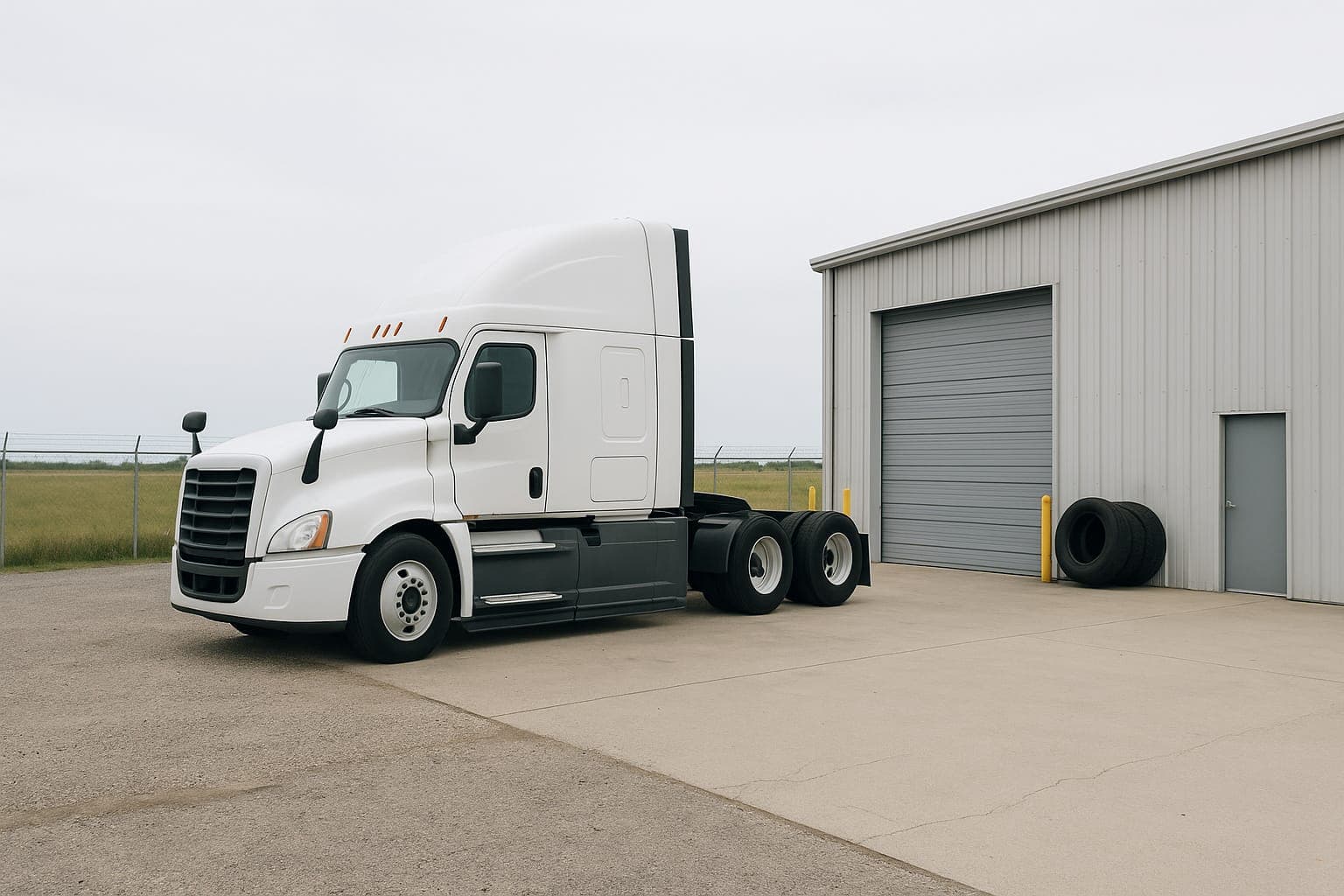
A single tractor unit parked without a trailer beside a maintenance building.

Who is liable when the truck driver owns the truck?

Usually the motor carrier the truck was working for, alongside the driver. When an owner-operator hauls under a carrier's federal authority, the Truth-in-Leasing regulations require a written lease in which the carrier takes exclusive possession, control, and use of the equipment and complete responsibility for its operation, and federal law requires, through those leasing rules, that the carrier be responsible for leased vehicles as if it owned them. The truck itself must be marked with the operating carrier's legal name and USDOT number, which is why the name on the door identifies the answering company. The lease also allocates insurance: the carrier's public-liability coverage protects the public while the truck works under its authority. Courts have long held carriers answerable on this structure, and the sound approach in a serious case is to identify and pursue the carrier and the owner-operator together, because the lease, its timing, and the driver's status are exactly the things the defense will contest.

01

One Truck, Two Businesses

A tractor-trailer on an American highway is frequently two businesses sharing one vehicle. The driver owns or finances the tractor — a one-truck operation, often with the owner's name in small letters near the cab. The freight moves under the operating authority of a motor carrier, whose name and federal number appear on the door in larger type.

If that truck hits you, the ownership fact invites a mistaken conclusion. An individual who owns one truck looks like a defendant with one truck's worth of resources, and people talk themselves out of strong cases on that assumption.

Federal law has already arranged things differently. An authorized carrier may perform transportation in equipment it does not own only under a written lease meeting federal requirements, and those requirements are the subject of this page. Before the crash ever happened, a document existed assigning control of that truck and responsibility for its operation. Your case begins by finding it.
02

The Lease the Law Requires

The Truth-in-Leasing regulations, in force for decades, dictate what the lease between an owner-operator and a carrier must say. The central provision is 49 CFR 376.12(c)(1), and it is worth reading in the regulation's own words: the lease "shall provide that the authorized carrier lessee shall have exclusive possession, control, and use of the equipment for the duration of the lease," and "shall further provide that the authorized carrier lessee shall assume complete responsibility for the operation of the equipment for the duration of the lease."

Congress stands behind the regulation. Under 49 U.S.C. 14102(a)(4), the Secretary may require a carrier using vehicles it does not own to have control of and be responsible for operating those vehicles, as if the motor vehicles were owned by the motor carrier. The Fifth Circuit, in a decision that shaped this field, held that the regulations carry the force and effect of law. A driver operating under such a lease became the carrier's statutory employee, it concluded, with the carrier vicariously answerable as a matter of law.

There is a refinement to state honestly. In 1992, the regulation gained a clarifying subsection: nothing in the control provision is intended to decide whether the driver is an independent contractor or an employee of the carrier. So the lease does not end the argument by itself, and carriers raise that subsection in every case.

What the lease does do is establish, in the carrier's own required paperwork, who held control of the truck that hit you, and responsibility for it — and the safety regulations separately define employee to include an independent contractor while operating a commercial motor vehicle. The label on the driver decides less than defendants wish it did.

03

The Door Is a Legal Statement

While the lease sits in a filing cabinet, its conclusion is painted on the truck. Federal marking rules require every self-propelled commercial motor vehicle to display the legal name of the motor carrier operating it, and that carrier's USDOT number, legible from fifty feet. If any other name also appears on the vehicle — the owner-operator's, for instance — the operating carrier's name and number must be added, preceded by the words "operated by."

The leasing rules complete the picture. During the lease, the carrier must identify the equipment under the marking rules, keep a statement with the truck certifying that the equipment is being operated by it, and carry trip documents clearly indicating that the transportation is under its responsibility.

Read those requirements from the roadside after a crash. The name and number on the door are a regulatory declaration of which company was operating that truck. Courts describe the purpose of this system in exactly those terms: giving an injured person an identifiable and financially accountable source of compensation. Photograph the door. In these cases, that photograph outranks nearly everything else you can collect at a scene.

04

How Courts Have Treated It

The doctrine built on these rules goes by several names — statutory employee, placard liability, logo liability — and you should understand both its strength and its edges.

Its strength is real. Federal courts of appeals across the country have used the statutory-employee analysis to hold carriers answerable for the operation of leased equipment, a line of authority the Fifth Circuit traced through multiple circuits in 1996. The Seventh Circuit — whose law governs Illinois federal courts — described the doctrine in 2015 as holding federally authorized carriers displaying their USDOT number on a truck vicariously liable for the negligence of drivers operating under a lease. It quoted Illinois authority for that description, then added a point of practical importance: placard liability does not exclude anyone. The injured plaintiffs in that case sued the placarded carrier, the owner-operator, and the driver on alternative theories, an approach the court called smart.

Its edges are where defendants live. The placard has been held a starting presumption whose effect can be contested: the Fifth Circuit concluded that a placard alone does not preclude a finding that a lease was terminated, and the 1992 clarification gives carriers an argument that the control regulation was never meant to settle employment status. Where the statutory route is contested, the ordinary one remains: the Eighth Circuit reversed summary judgment for a carrier because evidence of its actual control — uniform requirements, safety rides, testing, disqualification powers — would support a jury finding of an employment relationship.

The practical lesson is short. This body of law rewards the case that develops the lease and the placard alongside the real-world control facts, and punishes the one that relies on any single piece of it.

05

Who Insures What

The lease is also required to answer the insurance question, in writing. Under 49 CFR 376.12(j), it must clearly specify the carrier's legal obligation to maintain insurance coverage for the protection of the public under the federal financial-responsibility statute, and it must specify who provides every other coverage on the equipment, naming as its example bobtail insurance.

Translate that allocation into crash terms. While the truck operates under the carrier's authority — dispatched, loaded, or on a lease-covered movement — the carrier's public-liability coverage is the policy that faces you, and for interstate for-hire freight the federal schedule sets its floor at $750,000. Coverage for the tractor running outside the carrier's business, driving home without a trailer among other things, is typically the owner-operator's own non-trucking policy. Which side of that line the crash sits on is a genuine coverage battleground, litigated between insurers with your recovery in the middle. Where a broker arranged the load, a further layer can exist as well; the freight broker page covers it.

This is one more reason the moment-of-crash details matter so much to what you actually recover. Where the truck was going, what it carried, which dispatch it was under, and what the trip documents in the cab said are the facts that determine which policy, and how much coverage, stands behind the claim.

06

Reading the Truck After a Crash

Four moves protect this case in its first days, and you can start the first one at the scene.

Photograph the door on both sides if you safely can, and the trailer too. The operating carrier's legal name and USDOT number are the case's anchor facts. An "operated by" line, or a second name on the cab, is evidence of the exact two-business structure this page describes.

Expect the paperwork trail the regulations require, and demand its preservation. A written lease with the control and insurance clauses. The in-cab statement or lease copy. Trip documents tying the movement to the carrier's responsibility. The carrier's driver qualification file on this driver. Each is something federal rules obligated somebody to create.

Pin down the lease's status at the moment of impact. Effective dates, termination claims, and gaps between an oral arrangement and a signed document all get contested — appellate cases in this area have turned on crashes days before a lease was signed or after one allegedly ended. The dispatch records and load documents usually settle what the parties later dispute.

Name the full set of defendants the facts support. The carrier on the door, the owner-operator's business, and the driver are distinct parties with distinct insurance. Illinois and Florida both allow pleading in the alternative, and this is the structure it exists for.

If the door said one thing and the defense now says another, that conflict is worth a conversation with a lawyer while the records that settle it still exist.

FAQ

Frequently Asked Questions

Common questions about leased trucks, the meaning of the USDOT number on the door, independent-contractor defenses, and the insurance behind an owner-operator's rig.

Free Consultation

Get your free case evaluation today

Were you or a family member injured in a collision with a truck or commercial vehicle?

Where We Practice

Illinois & Florida

A trial firm handling truck and commercial vehicle injury claims in Illinois and Florida.

  • Chicago Office
    Zayed Law Offices1132 S Wabash Ave, Suite 303Chicago, IL 60605-2305
  • Joliet Office
    Zayed Law Offices195 Springfield Ave, Suite 202Joliet, IL 60435
  • Miami Office
    Zayed Law Offices804 NW 21 Terrace, Suite 205Miami, FL 33127

Call 24/7312.500.2674