Who Is Liable · Private Fleets

Private Fleet Truck Accident Claims

The truck that hit you may belong to a company that has never sold a mile of trucking in its life. Private fleets haul their owners' own goods, and the company on the registration answers for them directly.

Availability
24/7 · No fee unless we win
Practice
Illinois & Florida
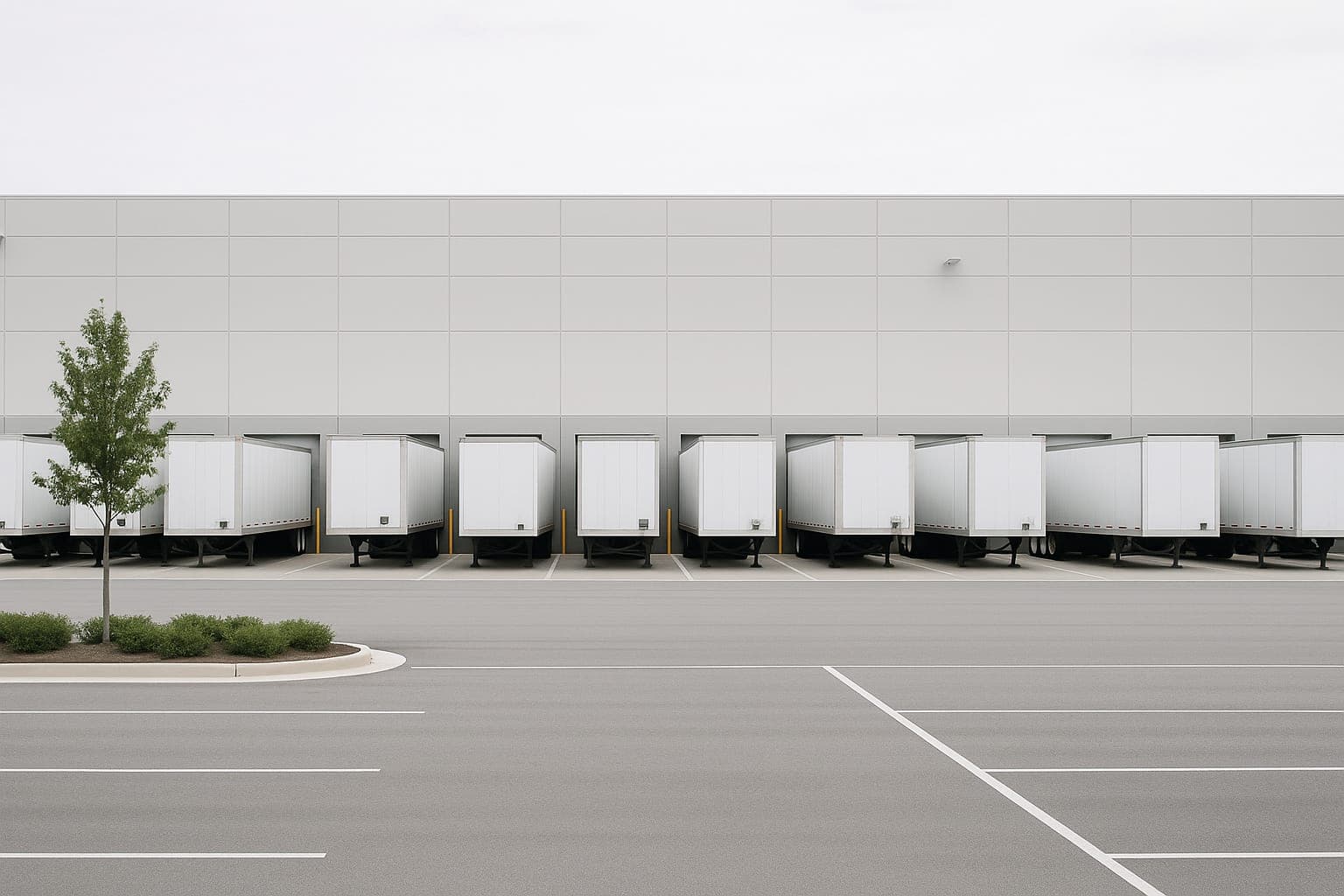
Unmarked trailers parked along the wall of a private distribution facility.

Who is liable when a company's own delivery or service truck causes a crash?

The company itself, in most cases. A private motor carrier hauls its own property in its own trucks with its own drivers, so the driver's employer and the truck's owner are the same corporate defendant, answerable for an employee's negligence under ordinary agency law. Federal safety regulations still apply to interstate private fleets, including driver qualification, hours of service, and maintenance. The federal minimum-insurance schedule generally does not: its applicability section reaches for-hire carriers and hazardous-materials haulers, and a company moving its own non-hazardous goods is neither. What stands behind the claim is the corporation — Walmart, for one, tells investors that auto liability is funded predominantly through self-insurance. The practical work is identification, because the registered entity is often a subsidiary whose name appears nowhere on the truck.

01

The Fleets Nobody Thinks Of

Ask someone to name a big trucking operation and they will name a freight company. Then look at the federal census.

In an August 2026 pull of the motor carrier records this site maintains, AT&T Services registers 18,627 power units — trucks and tractors, in census terms. Frito-Lay's sales fleet registers 15,635. Walmart Transportation registers 13,618, a Pacific utility more than 10,000, and the tree-trimming contractor Asplundh over 8,000. Uniform vans, pest control trucks, food distributors, equipment rental companies: the list of large fleets is substantially a list of companies whose business is something else.

These are private fleets: trucks a company operates to move its own goods and crews in furtherance of its own business. They are heavily present exactly where you are — residential streets, storefront deliveries, utility easements, suburban intersections — because their work is their owner's daily operations.

When one of them causes a crash, the case has a structure worth understanding before anyone makes assumptions borrowed from freight litigation. Some of that structure favors you. One piece of it, covered below, surprises people who handle freight cases for a living.
02

What Makes a Carrier Private

Federal law draws the line at compensation. A motor carrier provides transportation for compensation; a motor private carrier transports property it owns, leases, or holds for others, moving it to further a commercial enterprise. The regulations put it more compactly: a private motor carrier provides transportation of property by commercial motor vehicle and is not a for-hire motor carrier.

The registration system reflects the same line. Interstate operation of vehicles over 10,001 pounds requires USDOT registration for private and for-hire fleets alike. Operating authority is different: FMCSA's own guidance lists private carriers among those not required to hold it, because authority exists for carrying other people's freight for pay.

Why should you care about a licensing distinction? Because several practical features of your claim flow from it. The company cannot point to a motor carrier or a broker standing between itself and the driver. Its trucks, its employee, its cargo, its liability. The layered-defendant problems that dominate the parcel-network pages in this library mostly do not exist here.

03

Fully Regulated on the Road

A misconception defense lawyers do nothing to correct: that safety regulation is for trucking companies, and a retailer or utility moving its own goods sits outside it. The applicability rule says otherwise. The federal safety regulations apply to all employers, employees, and commercial motor vehicles that transport property or passengers in interstate commerce.

That means the machinery of a commercial vehicle case exists here too. Driver qualification files. Hours-of-service limits. Systematic inspection, repair, and maintenance obligations. Drug and alcohol programs where a commercial driver's license is involved. Each generates records, and records are how negligence gets proven rather than argued about.

One nuance is worth knowing early. Many private-fleet vehicles are under the weight thresholds that trigger commercial licensing, and short-haul rules exempt some drivers operating within a 150 air-mile radius from keeping formal daily logs. The duty to control fatigue remains; the paper trail changes shape, from logbooks to time records the employer must retain. A records demand written by someone who knows which documents this particular fleet must keep will reach evidence that a generic one misses.

04

The Policy That Is a Balance Sheet

Now the surprise. The federal minimum levels of financial responsibility — the rule that puts at least $750,000 behind a for-hire freight truck — reach two categories of carrier: for-hire carriers of property, and haulers of hazardous materials. A company moving its own non-hazardous goods is in neither category. For the ordinary private fleet, the famous federal insurance floor simply is not there.

Before that alarms you, look at what stands in its place. State financial-responsibility laws still apply to every vehicle on the road. Hazardous operations — a medical-waste fleet, a fuel hauler — are covered by the federal schedule at higher limits. Some large private fleets also hold for-hire authority alongside their private registration, and operations run under that authority sit inside the federal schedule after all; the census records both the Walmart and PepsiCo transport entities that way. And the companies in this category tend to answer for judgments the way Walmart describes in its own annual report: claims for auto liability, among others, are funded predominantly through self-insurance, with insurance maintained above that for larger exposures.

In practice, then, a serious claim against a substantial private fleet is rarely a fight about whether coverage exists. It is a fight with a well-resourced corporate defendant that pays losses from its own funds, manages claims professionally, and has no incentive to volunteer anything. The absence of a coverage ceiling cuts in your favor; the sophistication across the table does not.

05

The Name on the Truck Misleads

The brand on a private fleet's trucks and the entity on their registrations diverge constantly, and the census proves it in both directions.

PepsiCo's trucking runs under New Bern Transport Corporation, a subsidiary PepsiCo lists in its annual report's subsidiary exhibit and the census records with 9,786 power units — a fleet larger than most freight companies, registered under a name carrying no consumer brand at all. Search for the company you think you are suing and you can miss it entirely. Sysco registers across several entities. Large corporate families split fleets among operating companies by line of business or geography.

The divergence runs the other way too. Dedicated contract carriage puts a logistics company's drivers and registration behind a client's branded trailers, so the grocery name on the box can belong to a company that neither employs the driver nor owns the tractor. This library takes that structure up on its DHL page; what matters here is the habit it should build. Identification comes from the USDOT number and the registration behind it. Treat the paint as marketing.

Once you have the registrant, this is the cleanest liability structure on this site. An employee driver, a corporate employer, ordinary agency law connecting them, and the company's own hiring, training, supervision, and maintenance decisions available as direct claims alongside.

06

Building the Claim

The work below is how you convert that structure into an actual recovery.

Photograph the USDOT number and unit number if it is safe to, and get the crash report regardless. The registration identifies the operating entity, and the operating entity is the defendant. Everything else on this page depends on getting that step right.

Send preservation demands to the registered entity, early and specifically. Telematics, dash camera footage, driver qualification files, time records or logs, maintenance histories, and route or dispatch records all exist inside the company. Nothing about a private fleet requires it to keep them longer than the rules and its own schedule demand.

Frame the fatigue and maintenance case around the records this fleet actually keeps. Short-haul operations produce time cards where a freight case would produce electronic logs. The absence of a logbook is a difference in evidence, and a demand written to this fleet's obligations will still reach what the rules require it to retain.

Value the case knowing there is no coverage ceiling to anchor on. Self-insured corporate defendants evaluate claims on exposure and proof. The medical picture, the wage loss, and the quality of the liability evidence set the number. Illinois and Florida both apply their ordinary negligence law here, and both are states where this firm brings these cases.

The identification work described above is exactly the kind of thing worth handing to someone within days of the crash, while the records that answer it are still fresh.

FAQ

Frequently Asked Questions

Common questions about claims against companies that operate their own truck fleets, the rules that apply to them, and the insurance that does and does not exist.

Free Consultation

Get your free case evaluation today

Were you or a family member injured in a collision with a truck or commercial vehicle?

Where We Practice

Illinois & Florida

A trial firm handling truck and commercial vehicle injury claims in Illinois and Florida.

  • Chicago Office
    Zayed Law Offices1132 S Wabash Ave, Suite 303Chicago, IL 60605-2305
  • Joliet Office
    Zayed Law Offices195 Springfield Ave, Suite 202Joliet, IL 60435
  • Miami Office
    Zayed Law Offices804 NW 21 Terrace, Suite 205Miami, FL 33127

Call 24/7312.500.2674