We represent people injured by tractor-trailers, delivery vans, refuse trucks and other commercial vehicles, and the families of those who have died in them. These cases are won on identifying the right defendant — which company was operating the vehicle, and whether the driver worked for it or for a contractor — and that evidence has to be built brick by brick.
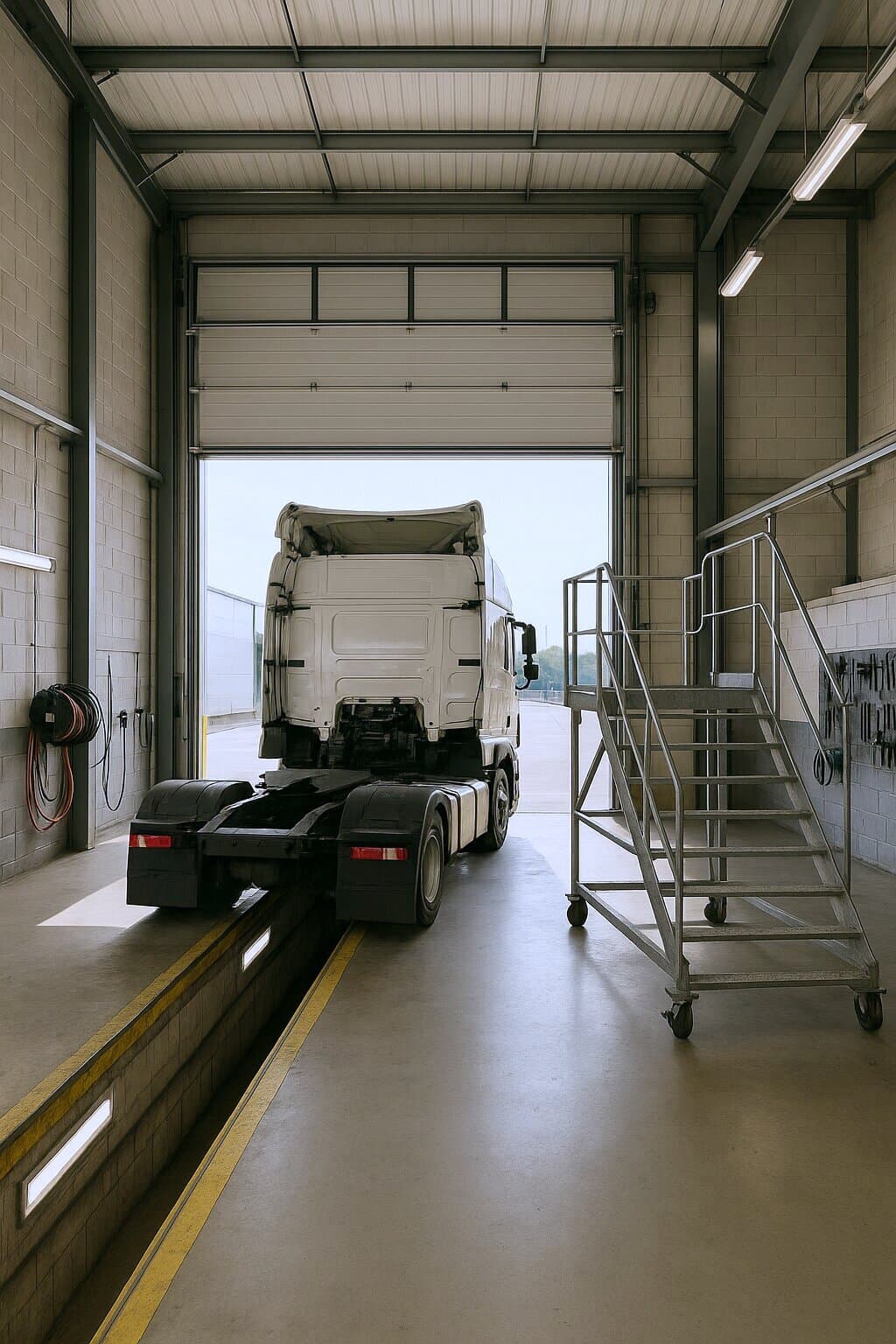
What kinds of truck and commercial vehicle claims does the firm handle?
The firm represents people injured in collisions with vehicles operated for a business or a public body — freight and tractor-trailer carriers, parcel and delivery networks, private and service fleets, refuse and waste haulers, school and passenger buses, and municipal vehicles — together with the families of those who have died in them. Claims are brought in Illinois and Florida. Which claim is available, and against whom, depends on how the operation behind the vehicle is actually structured.
What we look into first
Before anything else, one question: which company was actually operating that vehicle, and who employed the person driving it? The research behind that question is published below.
Two states, and one question asked first.
A commercial vehicle case runs on evidence the defendant is holding: engine and telematics data, dispatch and routing records, driver qualification files, hours-of-service logs, maintenance history. Retention periods for much of it are measured in months. The work starts with demanding that it be preserved, not with the pleadings.
Running alongside that is the identification question. Federal motor carrier registrations, not liveries, establish which company was operating a vehicle — and one corporate family routinely holds several separate registrations, while waste haulers register a distinct entity in every state they run in.
Whether a public body is anywhere in the chain is settled early too, because it changes the deadline, adds a pre-suit notice step, and can cap the recovery before the injury is even assessed.
Frequently Asked Questions
Common questions about what the firm handles and how commercial vehicle claims work.
Injury and wrongful death claims arising from collisions with vehicles operated for a business or a public body: tractor-trailers and freight carriers, parcel and delivery vans, private and service fleets — utility, food distribution, landscaping, equipment rental — refuse and waste trucks, school and passenger buses, and vehicles operated by municipalities and other public entities. The organising question is not what the vehicle was but who was running it.
A business stands behind the driver, which changes both what is available and what has to be proved. There are usually several insurance layers rather than one policy, and there is a body of operational evidence that does not exist in a two-car collision: driver qualification files, hours-of-service records, telematics and engine data, dispatch and routing records, maintenance history. Much of that evidence is held by the defendant and kept only for a limited period, which is why these claims are time-sensitive in a way that has nothing to do with the filing deadline.
That is the normal case in delivery work rather than the exception, and identifying the actual operator is the first task in the claim. FedEx discloses to investors that much of its pickup-and-delivery work runs on roughly 100,000 vehicles owned or leased by independent service providers. Amazon deliveries run substantially through contracted delivery businesses and app-based drivers in personal cars. Whether the brand behind the operation is also answerable turns on the degree of control it actually exercised — a question of evidence, not of the logo on the door.
Yes, and they are handled as a distinct kind of claim because they are one. Illinois compresses the period for suing a local public entity to one year under 745 ILCS 10/8-101(a). Florida requires written pre-suit notice to the responsible agency under Fla. Stat. 768.28(6) and caps recovery against the state and its subdivisions at $200,000 per person and $300,000 per incident under section 768.28(5)(a). Those rules apply to the public body, not to a private contractor doing the same work — which is why the first question in a refuse or transit case is who owned the operation.
A confidential, no-obligation conversation about the collision and what you know about the other vehicle. We explain which claims may be available, who the likely defendants are, which state’s law is likely to govern, and where the filing deadline stands, before anyone signs anything. If the matter does not fit this practice we will say so.
No. These matters are handled on a contingency fee basis — no legal fee unless the case recovers. Case costs such as expert witnesses, records retrieval, and depositions are advanced by the firm and reimbursed out of any recovery rather than paid by you during the case.
Illinois & Florida
A trial firm handling truck and commercial vehicle injury claims in Illinois and Florida.
- Chicago OfficeZayed Law Offices1132 S Wabash Ave, Suite 303Chicago, IL 60605-2305
- Joliet OfficeZayed Law Offices195 Springfield Ave, Suite 202Joliet, IL 60435
- Miami OfficeZayed Law Offices804 NW 21 Terrace, Suite 205Miami, FL 33127
Call 24/7312.500.2674
Get your free case evaluation today
Were you or a family member injured in a collision with a truck or commercial vehicle?